Most visitors discover Lake Jindabyne in summer, when the water is warm and the foreshore is buzzing. But the cooler months between March and August offer something genuinely different: golden autumn foliage framing an alpine lake, snow-dusted peaks reflected in glassy morning water, and a pace of life that lets you actually breathe.
At 900 metres above sea level, Jindabyne sits at the foot of Kosciuszko National Park, making it the natural base for the Snowy Mountains. The lake is here year-round, and so are the activities around it. Whether you are after outdoor adventure, local food and drink, or a few quiet days in a lakeside holiday home, this guide covers the best things to do at Lake Jindabyne across autumn and winter 2026, including the events and festivals worth planning your trip around.
1. Walk the Lake Jindabyne Foreshore Trail
The Lake Jindabyne Foreshore Trail is the single best free activity at the lake, and in the cooler months it is genuinely special. The sealed path runs roughly 7 kilometres in a loop from Banjo Paterson Park along the waterfront, past the main beach, and back through town. You can tackle the whole loop or walk a shorter out-and-back section, and the path is accessible for prams, wheelchairs, and leashed dogs.
In winter, the trail becomes crisp and quiet. On clear mornings, the snow-covered ranges to the south and west reflect on the lake surface, and mid-week you will often have the path almost to yourself. Parking is free at Banjo Paterson Park, and the walk takes between one and two and a half hours depending on how far you go. Bring layers. Frost on the path is common before 9 am from June onwards.
If you want to walk to the festival sculptures in April, you can do so directly from lakeside properties. Alpine Country Holidays’ lake-view properties including Lakeshore Jindabyne, The Wolery, and Lake Kami are all within comfortable walking distance of the foreshore path.
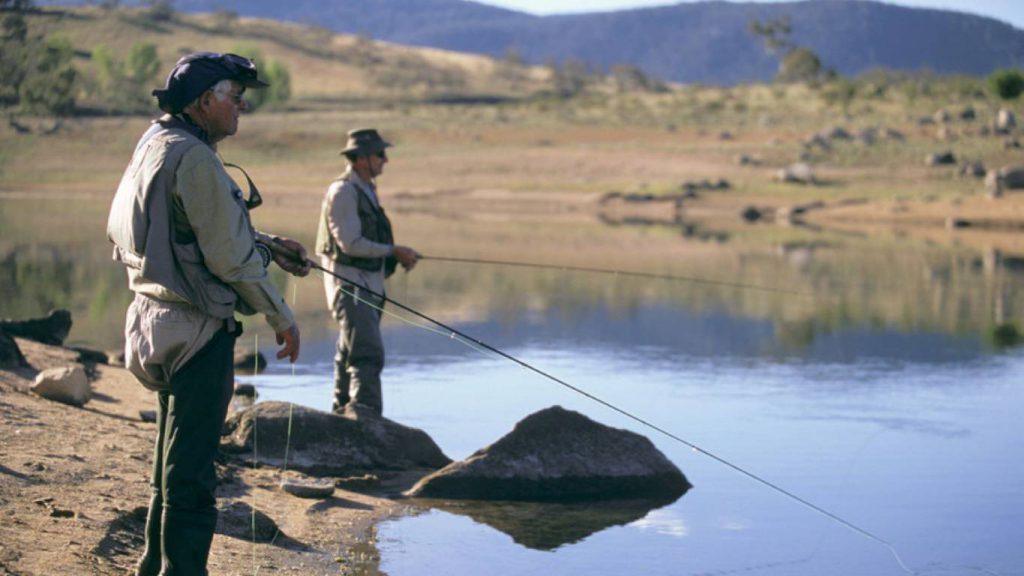
2. Try Trout Fishing on Lake Jindabyne
Lake Jindabyne is one of Australia’s premier trout fisheries, and autumn through winter is peak season. As water temperatures fall from around 18°C in March to below 10°C by July, rainbow and brown trout become more active and move into shallower water, making them far more catchable than during summer.
Brown trout in the lake have been recorded at over 5 kg, and the NSW Department of Primary Industries stocks the lake regularly through Gaden Trout Hatchery, located about 8 km east of Jindabyne. The hatchery itself is worth a visit, particularly with children. You can feed the fish in the outdoor display ponds and learn how the stocking programme works. Entry is $10 per adult.
Before you cast a line:
- Purchase a NSW recreational fishing licence from the NSW DPI website. Any angler aged 18 or over must hold one. Day, monthly, and annual options are all available.
- Check the current bag limits and minimum size rules on the NSW DPI website before you fish. Bag limits on trout in Lake Jindabyne are subject to regulation updates.
- Decide whether to fish from shore or a boat. The dam wall area and the river mouth at the eastern end of the lake are productive shore spots. If you don’t have a boat, hire options are available in Jindabyne town.
- Consider catch and release for larger fish. Brown trout over 50 cm are breeding-age fish, and releasing them helps maintain the lake’s trophy fishery.
3. Kayak or SUP on the Lake
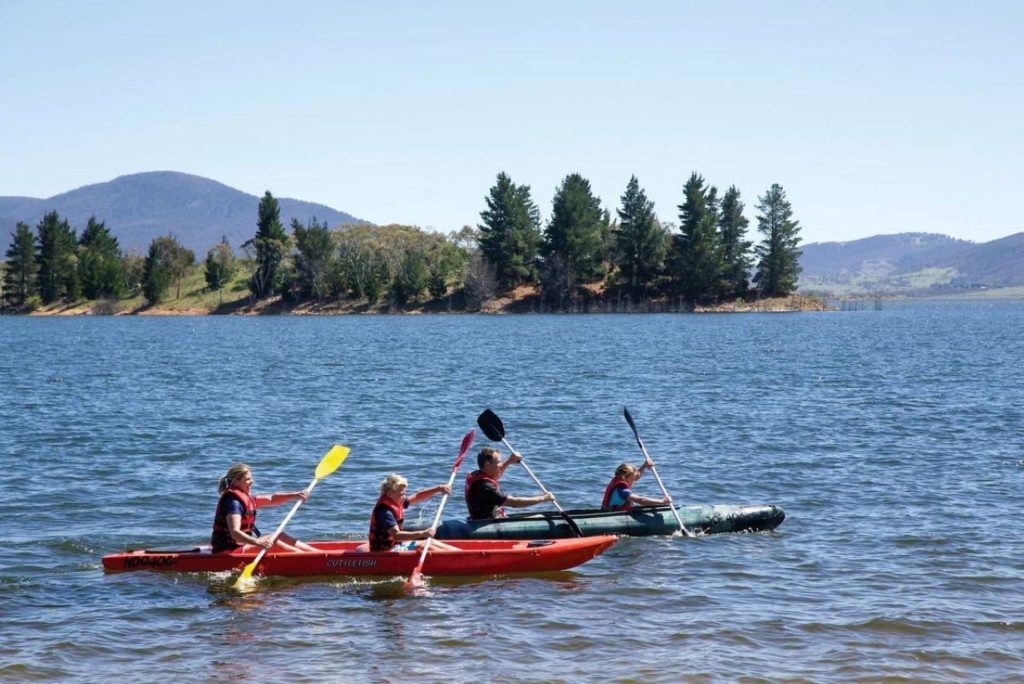
Water sports on Lake Jindabyne don’t stop when summer ends. In fact, autumn paddling is arguably the best time to be on the water: the lake is calm, crowds are gone, and the colours around the shoreline are extraordinary. Water temperatures in March and April typically sit between 14°C and 18°C, which is manageable in a full wetsuit.
Sacred Ride in Jindabyne hires kayaks, stand-up paddleboards (SUPs), and wetsuits, so you don’t need to bring your own gear. One of the most popular routes is the paddle out to Lion Island or Cup Island, two small islets in the middle of the lake. Allow two to three hours return from the main beach.
By May and June, the water is genuinely cold, and paddling is best left to experienced cold-water kayakers with appropriate dry suits and safety equipment. If that is not you, the foreshore walk gives you the same views from dry land.
Practical tips for autumn paddling:
- Check the wind forecast before launching. Afternoon westerly gusts can pick up quickly and push beginners into trouble.
- Start early. The lake is glassiest in the first two hours after sunrise.
- Always wear a personal flotation device (PFD). It is both a legal requirement and good sense on a large alpine lake.
- Lake temperatures drop fast in autumn. If you capsize, get out of the water as quickly as possible.
Properties close to the lake launch points make early morning paddles easy. Pilots View and Lakeshore Jindabyne are both well positioned.
4. Day Trip to Thredbo or Perisher for Skiing and Snowboarding
Jindabyne is the most popular base town for skiing in Australia, and with good reason. Perisher Resort sits about 35 kilometres and 35 minutes by road from town. Thredbo Resort is approximately 40 kilometres and 45 minutes away. Both are comfortably reached as day trips, leaving you to come back to a proper kitchen, a comfortable lounge, and a fraction of the on-mountain accommodation cost.
Thredbo vs. Perisher:
| Thredbo | Perisher | |
|---|---|---|
| Distance from Jindabyne | ~40 km, 45 min | ~35 km, 35 min |
| Terrain | Steeper, longer runs, Australia’s longest vertical drop | Australia’s largest ski area, gentler terrain spread across four interconnected resorts |
| Best for | Intermediate to advanced skiers, gondola access year-round | Beginners and families, snow play areas for kids |
| Getting there | Drive or local bus services | Drive or Snowlink Shuttle from Jindabyne |
| Season | Mid-June to early October (snow dependent) | Mid-June to late September (snow dependent) |
The ski season at both resorts typically opens in mid-June, subject to snow conditions. Opening dates are confirmed on each resort’s website, and they can move by a week or two depending on the season.
Both Perisher and Thredbo posted their 2026 opening windows on their websites in April, so check directly before finalising travel dates.
Ski hire in Jindabyne is worth considering. The Shed Ski Hire and Monster Depot both stock a full range of ski and snowboard gear at prices noticeably lower than on-mountain hire, and you avoid the resort queues on busy mornings. Book your hire in advance for July and August school holidays.
Non-skiers have good options too. Thredbo’s Kosciuszko Express Chairlift runs during winter and gives non-skiers access to the summit area walking tracks and alpine scenery. At Perisher, snow play areas near the base give younger children a safe and affordable snow experience without a full lift ticket.
For ski-season stays close to the slopes, Omaru 3 and Omaru 4 at Thredbo offer ski-in, ski-out access, while Jindabyne properties like Razorback 10 give you the base-town advantage.
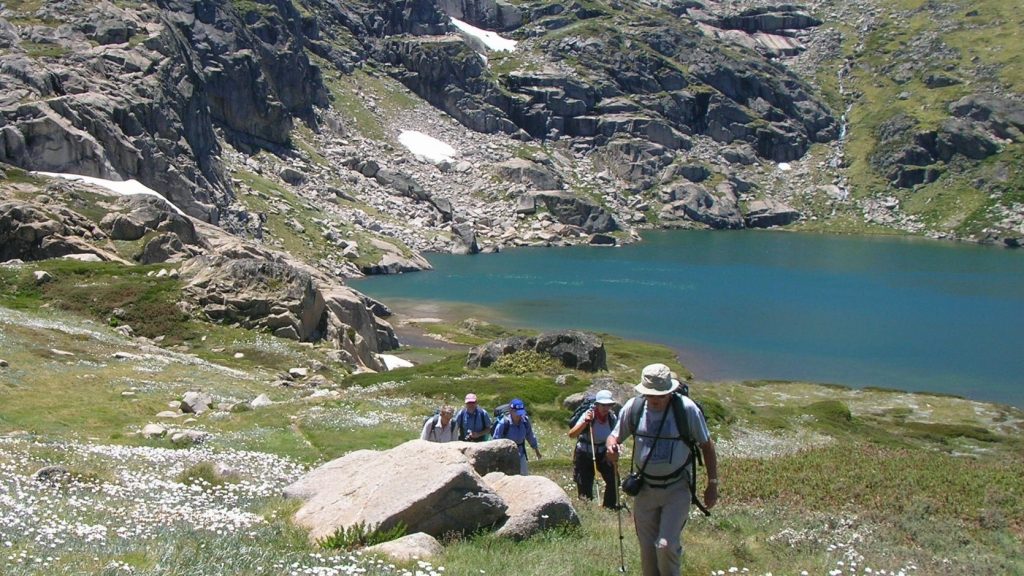
5. Hike the Australian Alps in Kosciuszko National Park
Autumn is arguably the best season for hiking in Kosciuszko National Park. Trail traffic drops sharply after Easter, temperatures are comfortable for walking, and the high alpine snowgrass turns gold and bronze across the plateau. Most trails above 1,500 metres remain snow-free until late May or early June.
Recommended trails by season:
- Charlotte Pass to Blue Lake (6 km return, moderate): One of Australia’s most scenic alpine walks, passing glacial lakes and granite outcrops. Best done in April and early May before the upper snowfields close. Carry warm layers regardless of the forecast.
- Thredbo River Track (2.4 km one way, easy): A flat, family-friendly path along the Thredbo River from the ski village to the resort entrance. Accessible through autumn and much of winter, and dog-friendly in sections.
- Lake Crackenback Circuit (6.8 km, moderate): A popular loop from Lake Crackenback Resort, passing wetlands and snowgum woodland. Snow-free for most of autumn and accessible for families.
A NSW National Parks vehicle entry pass is required when driving into the alpine area of Kosciuszko National Park. Daily and annual passes are available online and at park gates. Buy yours before you arrive to save time.
In winter, snowshoeing opens up a different set of experiences. Snowshoe hire is available at Thredbo and Perisher, and the Thredbo Valley Track is a popular winter alternative for those who want to explore the snow without a ski lift ticket.
6. Distilleries and Craft Beer in Jindabyne
Jindabyne’s food and drink scene has grown considerably, and the cooler months are the best time to sit down and enjoy it. Rain and cold weather outside make a warm tasting room all the more appealing.
- Wildbrumby Thredbo Valley Distillery sits in the Thredbo Valley about 20 minutes from Jindabyne, and consistently tops local attraction ratings (4.5/5 on Google Maps from over 600 reviews). They produce schnapps, gin, and other spirits using alpine botanicals, and the tasting room is open year-round. It is a genuinely relaxing afternoon, and the drive down the valley is reason enough to go.
- Jindabyne Brewing is the town’s most popular social venue and the highest-rated local attraction on Google Maps (4.6/5 from over 929 reviews). Their beers draw on Snowy Mountains themes and pair well with a long lunch after a morning on the lake or the trails. Post-ski sessions here on a winter afternoon are a Jindabyne ritual for many regulars.
- Kosciuszko Brewing Company is a smaller and quieter option if you prefer a less busy atmosphere. It works well as a second stop on a craft brewery loop through town.
- Shut the Gate Wines at The Little Grocer stocks local wines alongside deli produce. If you are staying in a self-catering holiday home, it is the best place in town to stock the kitchen and the wine rack in one stop.
Properties with well-equipped kitchens and pantry space, such as Camber Farmhouse and Razorback 15, are ideal if you want to cook local produce and open a bottle from Shut the Gate by the fire.
7. Warm Up Indoors: Cold-Day and Rainy-Day Options
Not every day at Lake Jindabyne will be clear and calm. When the weather turns, there are good options close to the lake that don’t require driving up the mountain.
- Snowy Region Visitor Centre: Free entry and genuinely interesting, especially for first-time visitors. The centre covers the history of the Snowy Mountains Hydro-Electric Scheme, including the story of the original Jindabyne township that now sits submerged under the lake. Children generally love the scale models and the fishing pond outside.
- Gaden Trout Hatchery: A short drive from town, the hatchery’s outdoor display ponds can be visited even on cool days. The fish are most active and visible on overcast mornings.
- Jindabyne Art Gallery and Monaro Art Group Gallery: Both are free, and between them they represent a good cross-section of local and regional Australian art. Worth an hour on a slow afternoon.
- Wildbrumby Distillery tasting room: Already mentioned in the drinks section, but it doubles as one of the best rainy-afternoon destinations in the region. A warm room, a guided tasting, and a valley that looks good even in the rain.
- Self-catering in a cosy holiday home: A properly equipped holiday home with a wood fire or reverse-cycle heating is genuinely the best rainy-day option. There is something right about spending a winter afternoon in a warm kitchen in the mountains. Properties like Wendaleigh Eight, Razorback 10, and Edge 1 are well set up for exactly this.
8. Go Mountain Biking on the Snowy Mountains Trails
Autumn is the sweet spot for mountain biking around Jindabyne. Trails are dry, temperatures are comfortable, and the crowds that arrive with the ski season are still weeks away.
- Thredbo Bike Park is Australia’s premier lift-accessed mountain bike destination. The park runs through the shoulder season between the snow melting and the next winter’s snowfall, typically from October through to early June. The gondola-accessed trails range from beginner-friendly gravel tracks near the base to technical descents for experienced riders. Check thredbo.com.au for the 2026 bike park season closing date, as it is snow-dependent.
- Lake Crackenback area trails offer flatter, family-friendly riding that stays accessible well into autumn and does not require a gondola ticket. The terrain here is more about scenery than technical challenge, and it is a good option if you are riding with children or beginners.
- Wilderness Sports in Jindabyne stocks mountain bike hire for all skill levels and ability. Book ahead for autumn long weekends, particularly Easter, when the trails are at their busiest outside of ski season. March through May generally offers uncrowded trails even on weekends.
9. Take a Scenic Helicopter Flight Over the Snowy Mountains
A helicopter flight over the Snowy Mountains sits in a different category from most of the activities on this list. It is a bucket-list experience, and it is one that works particularly well in winter, when the ranges are white and the lake sits dark against the snow by contrast.
Snowy Mountains Helicopters operates scenic flights from Jindabyne, covering routes over Lake Jindabyne, the Kosciuszko alpine plateau, the Snowy Hydro system, and Mount Kosciuszko. Flights are available year-round, weather permitting, and run from short 10-minute hops to extended hour-long tours of the high country. Winter flights over the snow are popular for milestone birthdays and anniversaries.
Alpine Aviation Australia also operates in the region, offering fixed-wing scenic flights as an alternative. If you are comparing options, check flight duration and route specifics, as routes and aircraft types vary significantly between operators.
Book flights well in advance during July and August ski season, particularly over NSW and Victorian school holidays, when demand peaks.
Ready to Book Your Lake Jindabyne Getaway?
Lake Jindabyne in autumn and winter is an underrated part of the Snowy Mountains calendar. Fewer crowds, lower prices outside ski-season peak, and a lake that looks completely different when the mountains behind it are capped with snow. Whether you want a base for the slopes, a quiet retreat by the water, or a front-row seat for the Lake Light Sculpture Festival’s 25th anniversary, the activities are there.
Browse Alpine Country Holidays’ Jindabyne properties to find a holiday home that puts you where you want to be. Lakeside, ski-adjacent, or somewhere peaceful in between, availability fills faster than most people expect for the May-to-August window.
Frequently Asked Questions
What is there to do at Lake Jindabyne in winter?
In winter (June to August), Lake Jindabyne is primarily the base for skiing at Thredbo and Perisher, both within 45 minutes by road. Beyond the slopes, the lake foreshore walk is beautiful in crisp weather, trout fishing is at its most productive, and local venues like Jindabyne Brewing and Wildbrumby Distillery provide warm indoor options. Helicopter flights over the snowy ranges are a popular winter highlight for non-skiers.
Can you swim in Lake Jindabyne in autumn?
Autumn water temperatures typically range from 12°C to 18°C, which is cold but manageable for wetsuit paddling and kayaking. Open swimming is most comfortable in late summer through early March. By April and May, the water is too cold for comfortable swimming without a wetsuit, but the lake remains popular for fishing, kayaking, and foreshore walking well into autumn.
Is Jindabyne worth visiting outside ski season?
Yes. Autumn brings golden foliage along the foreshore trail, the Lake Light Sculpture Festival’s 25th anniversary over Easter 2026, world-class trout fishing, and uncrowded hiking trails through Kosciuszko National Park, all at well below ski-season prices. Many visitors rate the shoulder season as their preferred time to visit precisely because the town is quieter and the natural scenery is at its most striking.
What to do in Jindabyne on a rainy day?
The Snowy Region Visitor Centre (free, covers the Hydro Scheme and the submerged Old Jindabyne township) is the best starting point. Wildbrumby Distillery’s tasting room, the Jindabyne Art Gallery, and Gaden Trout Hatchery are all accessible in wet weather. If you are staying in a holiday home with a fireplace or solid heating, a rainy day in the mountains with good food and local wine is genuinely one of the better ways to spend it.
Do I need a licence to fish at Lake Jindabyne?
Yes. A NSW recreational fishing licence is required for all anglers aged 18 and over. Licences are available online through the NSW Department of Primary Industries website and can be purchased as a daily, monthly, or annual option. Bag limits and size rules for trout also apply, and these are listed on the same site. Buy your licence before you arrive so you can head straight to the water.
How far is Jindabyne from Thredbo and Perisher?
Thredbo Resort is approximately 40 kilometres from Jindabyne, around 45 minutes by road. Perisher Resort is around 35 kilometres away, approximately 35 to 40 minutes’ drive. Both are straightforward day trips from Jindabyne, and many visitors prefer the larger range of accommodation options and lower prices in town over staying on the mountain itself. Snowlink Shuttle also runs a regular bus service from Jindabyne to Perisher during the ski season.