
No other destination in Australia delivers the full weight of a true alpine winter experience as the Snowy Mountains. Snowfields that stretch across the Main Range, glacial lakes that mirror slate-grey skies, and villages that pulse with life from June through September.
At the centre of it all sits Mt Kosciuszko, the country’s highest peak at 2,228 metres, anchoring a landscape shaped by ice, granite, and snowgum forest.
Whether you’re staying in Jindabyne, Thredbo Village, Crackenback, or the surrounding valleys, this guide gives you a practical, current look at what winter 2026 holds. The best on-snow activities, off-slope excursions, dining, wildlife, safety essentials, and guidance on choosing an Alpine Country Holidays property as your base.
Snowy Mountains in Winter
When Is Snow Season and What Weather to Expect?
The NSW ski season opens on the Queen’s Birthday long weekend in June and closes on the October long weekend.
In practice, the most consistent snow window runs from mid-July through August, when cold fronts push reliable falls across the higher elevations and groomed runs reach full depth.
Expect temperatures at resort altitude to sit between -5°C and 5°C during the day, dropping sharply at night. Jindabyne, at around 900 metres, sits lower than the resorts and sees occasional snow dustings rather than settled base.
Snow conditions vary year to year. Snowmaking infrastructure at both Perisher and Thredbo extends the reliable season, covering key runs when natural snowfall is lean.
Checking resort snow reports and the NSW National Parks and Wildlife Service (NPWS) alerts before you travel is standard practice, not optional.
Where to Stay and Explore From?
Jindabyne functions as the primary base town for the Snowy Mountains in winter. It sits at the edge of Lake Jindabyne with direct access to Kosciuszko Road and is roughly 35 minutes from Perisher and 25 minutes from Thredbo. The town carries accommodation, dining, ski hire, and everything needed to move in and out of the park across a week.
Thredbo Village operates as an alpine resort with ski-in, ski-out accommodation and a pedestrian village at the base of the lifts. Staying in the village cuts out the daily drive.
Perisher offers on-snow lodging across its four linked resort areas. Selwyn and Charlotte Pass suit those after smaller crowds: Selwyn draws families with young children, while Charlotte Pass sits at 1,755 metres, accessed only through Perisher, with a remote and snowbound atmosphere unlike anywhere else in Australia.
Alpine Country Holidays operates properties across Jindabyne, East Jindabyne, and the Crackenback and Thredbo Valley corridors. These locations place guests within quick reach of lifts, snow play, lake walks, and the dining scene – giving every traveller type a practical, well-positioned base.
A Timely Reminder? Think About Your Winter Holiday Now!
Book Now with only a 10% deposit PLUS receive a 10% discount!
BONUS – Bookings received before the 1st June 2026 qualify for 20% off your ski rental delivered to your accommodation and fitted personally by SkiDoc
Can’t-Miss On-Snow Adventures in 2026
Skiing and Snowboarding
Perisher is the largest ski resort in the Southern Hemisphere. Four linked resort areas – Perisher Valley, Smiggin Holes, Blue Cow, and Guthega – connect across 47 lifts and terrain ranging from wide beginner runs to challenging steeps.
It draws families, mixed-ability groups, and those who want variety across several days without repeating the same runs. The Skitube from Bullocks Flat, near Jindabyne, provides direct access without driving into the resort.
Thredbo offers the longest vertical drop of any Australian resort at 672 metres. Runs like Supertrail – Australia’s longest at 5.9 kilometres – define the experience for strong intermediates and advanced riders. The village itself carries a European character: tight laneways, après bars, restaurants, and an evening programme that continues well after the lifts close. Thredbo also runs a strong children’s events programme and regularly hosts national racing and ski-cross competitions.
Selwyn operates as a compact, value-focused resort well suited to short beginner days and family snow play. Charlotte Pass, accessible only by Skitube from Perisher and a snow vehicle transfer, offers uncrowded terrain at high altitude with a genuine off-grid atmosphere.
Learn to Ski or Board
Both Perisher and Thredbo run snowsports schools with structured beginner and development programmes. Group lessons run daily through the season, private instruction is available across all levels.
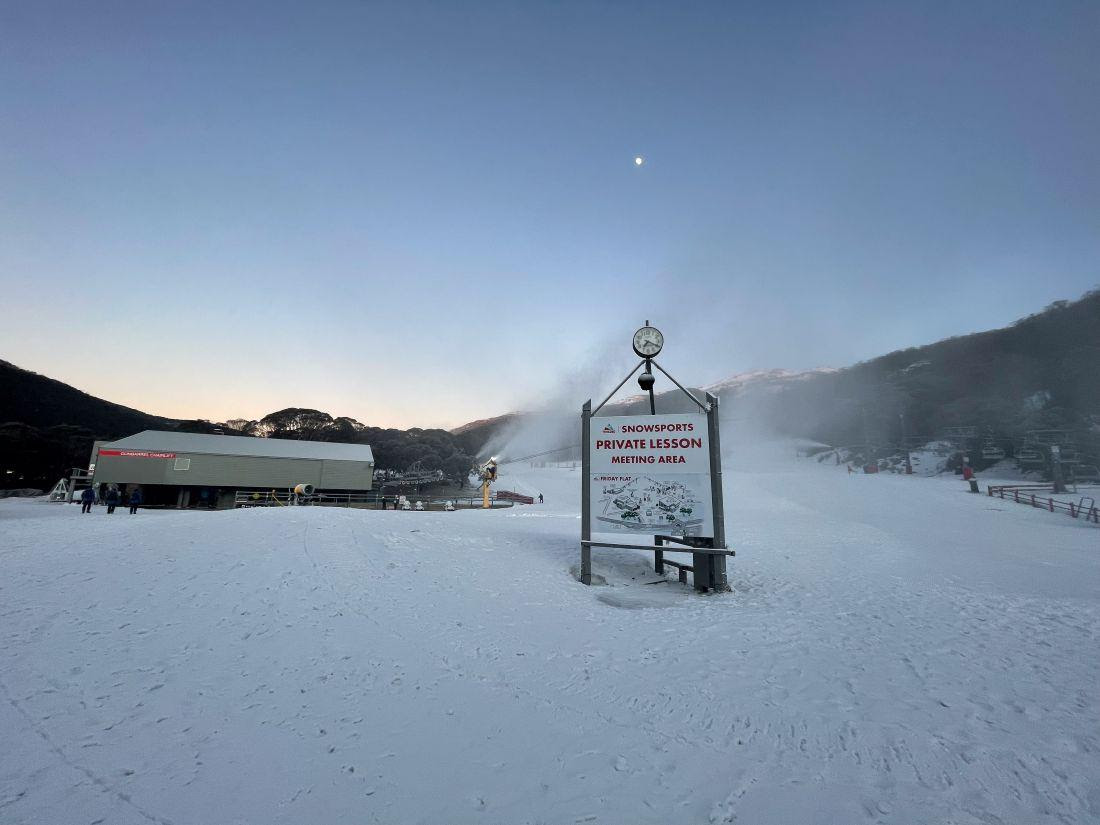
Perisher’s Friday Flat is a dedicated beginner precinct with gentle terrain, rental facilities, and a learning environment separate from main resort traffic.
For adults on a first-time visit, a weekend with two morning group lessons is a realistic introduction to the sport – enough to progress from stationary wedge turns to moving independently on beginner slopes. Over five to seven days, the same beginner can expect to access blue (intermediate) terrain with confidence.
Tobogganing and Snow Play for Non-Skiers
Not every winter visitor needs to ski. Selwyn’s dedicated toboggan park centres on a 150-metre snow carpet served by a handle tow for repeat laps – purpose-built for families who want the experience without the equipment cost or learning curve of skiing.
Around the resorts, snow play is available near designated carparks and open slopes. Snowmen, snowball fights, and gentle toboggan slopes are accessible without paying for lift access. Guided snow-play tours – available through resort activities desks – offer a structured, safety-conscious option for visitors unfamiliar with mountain conditions, particularly useful for groups travelling with young children.
Iconic Snowy Mountains Winter Experiences
Ride the Merritts Alpine Gondola and New Alpine Coaster
Thredbo holds the only alpine gondola in Australia. The Merritts Gondola lifts guests from the village base to the Cruiser mid-mountain area in minutes, opening up access to the upper mountain terrain and sweeping views across the Snowy Mountains range.
Non-skiers ride it for the scenery alone – a legitimate winter experience without boots or poles.
The Thredbo Alpine Coaster is the standout new addition for 2026. A 1.5-kilometre tracked ride that descends through tunnels, over bridges, and around banked curves, it operates year-round and puts riders in control of their own speed.
It runs separately from the ski lifts and suits the full age range – children, adults, and groups.
Tick Off Thredbo’s “Big 5” Runs and Ring the Community Bell
The “Big 5” at Thredbo refers to the resort’s five signature long runs – including Supertrail and High Noon – designed as a challenge for strong intermediates and advanced riders wanting to cover serious vertical in a single session.
Completing all five in a day is a recognised accomplishment among regular Thredbo visitors and a natural goal for a dedicated ski day.
At the top of Karels T-bar, the highest lifted point in the resort, sits the Community Bell at 2,037 metres. Ringing it is a ritual: part celebration, part acknowledgement of where you are in the landscape.
Night Skiing, Flare Runs and Fireworks Spectacular
Perisher and Thredbo both operate night skiing sessions during peak season, typically mid-July through August. Floodlit runs extend the ski day past sunset – a different experience from daylight skiing, with a quieter mountain atmosphere and shorter lift queues on certain evenings.
Thredbo’s Saturday night Flare Run and Fireworks Spectacular ranks among the most distinctive events on the Australian alpine calendar. Ski instructors descend Supertrail carrying flaming flares after dark, followed by a fireworks display over the village.
For families with children, photographers, and first-time mountain visitors, it delivers a moment that defines the winter trip.
Check Thredbo’s 2026 events calendar for confirmed dates, peak July and August Saturdays are the most consistent window.
Snowcat Dinners and Sunrise Tours
Snowcat dinners transport guests to on-mountain restaurants by tracked snow vehicle after the lifts close – a private mountain setting with dinner service at altitude.
Sunrise tours and backcountry experiences cater to those wanting the mountain in its most unguarded form: pre-dawn starts, guided traverses, and the kind of silence the peak-hour slopes never offer. These experiences book out early.
For guests staying at an Alpine Country Holidays property in Thredbo Valley or Crackenback, proximity to the resort makes early departure times practical rather.
Cross-Country Skiing, Snowshoeing and Backcountry Adventures
Cross-Country Skiing at Perisher and Selwyn
Perisher maintains one of Australia’s most developed cross-country networks. Groomed loops depart from the Nordic Shelter in Perisher Valley, with routes ranging from flat, short circuits suited to beginners through to longer trails covering genuine backcountry terrain.
Selwyn offers access to cross-country and snowshoe trails from the Three Mile Dam area, providing a quieter, less-trafficked alternative to the larger resorts. The terrain is open and the pace unhurried – suited to those who want winter exercise without the infrastructure of a full ski resort.
Guided Snowshoe Tours and Easy Winter Walks
Snowshoeing requires no prior skill and opens the snowgum forest and winter meadows to anyone with reasonable fitness.
The Rock Creek Snowshoe Track near Perisher is a well-maintained, designated route that moves through subalpine vegetation with clear trail markers. Guided tours from Thredbo extend this further, incorporating commentary on local ecology, snowgum biology, and the indigenous heritage of the Monaro and high country.
For families travelling with non-skiing adults or older children, a half-day guided snowshoe walk is among the most accessible and memorable activities available.
Off-Slope Winter Adventures and Day Trips
Short Scenic Winter Walks and Lookouts
Not every winter walk requires snow gear. Charlotte Pass lookout provides direct sightlines toward Mt Kosciuszko and the Main Range – one of the most photogenic viewpoints in the park, reachable without technical equipment in stable winter conditions.
Short maintained tracks near resort villages offer accessible winter walking when the weather holds.
Winter conditions change quickly at altitude. Check NPWS alerts at nationalparks.nsw.gov.au before setting out, and carry layers regardless of conditions at the trailhead.
Yarrangobilly Caves and Thermal Pool
Yarrangobilly Caves sit within Kosciuszko National Park, roughly 90 kilometres north of Jindabyne along the Snowy Mountains Highway.
The cave system holds limestone formations developed over millions of years – stalactites, shawls, and columns – accessible through guided tours that run year-round.
The thermal pool adjacent to the caves sits at approximately 27°C, spring-fed and set within a natural bush clearing. It is warm rather than hot but provides a genuinely unique experience when the surrounding landscape is frozen.
Pair it with a cave tour for a half-day excursion that works well on a rest day or in combination with a drive along the Snowy Mountains Highway.
Picnics, Photography and Relaxed Strolls
Lake Jindabyne in winter carries a particular quality of light. Snow-dusted ranges to the west, open skies above, and a foreshore that empties of summer crowds.
The lakeside walking and cycling path runs several kilometres around the lake edge and works as an easy half-day activity on low-visibility or rest days when the mountain is under cloud.
Photography around the lake when the pre-dawn window and late afternoon offer the most direct light on the ranges, while winter mist on the water appears reliably in the hour after sunrise.
Alpine Way and Snowy Mountains Highway
The Kosciuszko Alpine Way connects Jindabyne to Thredbo and continues through to Khancoban and the Murray River valley – a drive that passes through snowgum woodland, river gorges, and historic high-country landscapes.
The Snowy Mountains Highway links Adaminaby, Kiandra, Tumut, and the northern ranges. Both routes pass historic stockmen’s huts, NPWS trailheads, and viewpoints that reward an unhurried pace.
Winter driving on these roads carries real requirements.
- Snow chains are compulsory on designated road sections for two-wheel-drive vehicles when conditions demand it.
- Road closures occur after heavy snowfall, sometimes without much notice.
- Check Live Traffic NSW at livetraffic.com and NPWS alerts before any mountain drive.
Warming Up the Winter Nights
Eagles Nest at Thredbo sits at the top of the Crackenback Superchair and operates as Australia’s highest restaurant. The menu draws from Italian-influenced alpine cooking – warm, substantial dishes suited to the altitude and the cold. The gondola ride up at dusk, with views across the darkening valley, is half the experience.
Book in advance, sittings during peak season fill weeks out.
Merritts Mountain House on the mid-mountain deck runs DJ sets, food service, and drinks through the afternoon and early evening, bridging the gap between last lifts and dinner.
The Alpine Bar and other village venues carry the evening forward with live music on weekends. Perisher’s après scene concentrates around the resort base, with options across all four linked areas depending on where you finish your day on the mountain.
Wildbrumby Distillery occupies a timber building on the Alpine Way between Jindabyne and Thredbo. It produces schnapps and gin using local botanicals and fruit, and operates a café and sculpture garden alongside the tasting room.
Pair a tasting excursion with a Snowy Mountains Highway drive for a full half-day off the mountain.
Wildlife, Culture and Local Stories
Wild Brumbies, Kangaroos and Alpine Wildlife Watching
The wild brumbies of the Snowy Mountains carry a weight of Australian cultural history. Descended from pastoral and military horses released or lost across the high country over more than a century, they move in mobs across open plains and subalpine grasslands.
Long Plains Road near Yarrangobilly is among the most reliable locations to observe large groups, particularly in the early morning and late afternoon.
Island Bend, Guthega, and the quieter road corridors around the park also produce regular sightings of eastern grey kangaroos, wallabies, and wombats going about their routines at the edge of snowgum country.
Observe them from a distance. Do not approach, feed, or attempt to interact with them. The experience of watching a mob move across a snow-dusted plain at first light is complete without interference.
Visitor Centres, Museums and Heritage
The Snowy Region Visitor Centre in Jindabyne is the practical starting point for any trip into Kosciuszko National Park. Staff provide current trail conditions, safety updates, park pass information, and local knowledge.
Call in before heading into the park, particularly if you intend to walk, snowshoe, or drive into higher elevations.
The Thredbo Alpine Museum, located within the resort village, documents the history of Australian snow sports from early 20th-century skiing through to the development of the modern resort. Interactive displays and archived photographs give context to the mountain you are standing on – a worthwhile hour on a bad-weather day or a rest afternoon.
It is free to enter and suits a wide age range.
Historic Towns and Snowy Hydro Legacy
Cooma, 65 kilometres north of Jindabyne, served as the headquarters for the Snowy Mountains Scheme – one of the most significant engineering undertakings in Australian history.
The Snowy Mountains Hydro-Electric Scheme, constructed between 1949 and 1974, redirected water through 145 kilometres of tunnels and 80 kilometres of aqueducts, employing over 100,000 workers from more than 30 countries. The Snowy Hydro Discovery Centre in Cooma tells this story with the scale it deserves. The town’s heritage streetscape reflects the era and the cultural mix that built it.
Dalgety, south of Jindabyne along the Snowy River, is a quieter stop: a historic pastoral town with an 1895 bridge, a riverside setting, and the kind of unhurried atmosphere that earns its reputation among travellers who prefer texture over tourism infrastructure.
Both towns work well as half-day excursions from a Jindabyne base on a non-ski day.
Alpine Country Holidays: Bases for Every Kind of Winter Trip
Jindabyne is the most practical winter base in the Snowy Mountains, and it remains the strongest choice for the widest range of travellers.
Its position at the edge of Lake Jindabyne, combined with direct road access to both Thredbo (25 minutes) and the Bullocks Flat Skitube to Perisher (20 minutes), means no resort is out of reach on any given day.
The town’s dining, ski hire, medical services, and retail facilities sit close to every Alpine Country Holidays property in the area – removing the logistical friction that affects more isolated bases.
FAQs
Is the Snowy Mountains good for non-skiers in winter?
Yes. Non-skiers have access to tobogganing at Selwyn, guided snowshoe walks, the Thredbo Alpine Coaster, the Merritts Gondola, Yarrangobilly Caves and thermal pool, scenic drives along the Alpine Way and Snowy Mountains Highway, lake walks at Jindabyne, wildlife watching, distillery and winery visits, and the full dining across Thredbo and Jindabyne.
What is the best month to visit the Snowy Mountains for snow?
July and August deliver the most consistent snow coverage. July aligns with NSW school holidays and carries the highest visitor numbers; August tends to offer comparable snow depth with marginally less congestion.
Do I need a 4WD or snow chains to drive to Thredbo or Perisher?
Snow chains are compulsory for two-wheel-drive vehicles on designated road sections when conditions require. Carry them any time you travel into the park in winter.
How many days do I need in the Snowy Mountains in winter?
Three to four days covers a solid ski introduction and one or two off-slope activities. Five to seven days allows a fuller experience: multiple resorts, day trips, and the slower pace that reveals what the region holds beyond the ski fields.
Can I visit the Snowy Mountains in winter with young kids?
The Snowy Mountains handles young children well. Selwyn’s toboggan park is purpose-built for small visitors. Perisher’s Friday Flat beginner precinct and its snowsports school run dedicated children’s programmes. Snow play areas near carparks require no lift ticket. Indoors, the Thredbo Alpine Museum and Snowy Region Visitor Centre engage young travellers on rest days.
3 thoughts on “[2026] Things To Do in Snowy Mountains in Winter You Can’t Miss”
Comments are closed.