Transport Guide: Getting to Jindabyne from Sydney & Melbourne
Planning a Snowy Mountains holiday starts with one practical question: how do I actually get there?
The good news is that Jindabyne is well within reach of both Sydney and Melbourne, and you have more options than most people realise. Sydney is roughly 450 km away – a five-hour drive or a seven-hour coach ride. Melbourne is closer to 650 km – a seven-hour drive with a good route choice, or a fly-and-hire-car combination that costs surprisingly little. Once you arrive, the town itself is easy to navigate on foot, and ski buses connect you directly to Perisher and Thredbo.
This guide covers every realistic way to get here from either city, compares them honestly, and tells you what to expect on the road in the 2026 winter season.
How to get from Sydney to Jindabyne?
Sydney to Jindabyne is a manageable trip by any standard, and the right option depends on your group size, budget, and whether you want flexibility once you arrive.
| Mode | Duration | Approx. Cost (per person) | Best For |
|---|---|---|---|
| Drive | ~5 hrs | Fuel + tolls (~$60–$90) | Families, groups, those with ski gear |
| NSW TrainLink coach | ~7 hrs 15 min | $40–$70 | Solo travellers, budget trips |
| SnowExpress/FlixBus | ~5–6 hrs | $50–$90 | Ski-season travel, no car needed |
| Fly to Canberra + hire car | ~3.5 hrs total | $150–$280 | Travellers who want speed and flexibility |
The table above uses approximate costs based on typical fares and does not include accommodation, park entry fees, or luggage surcharges. Book as early as possible – every option gets more expensive (and sometimes unavailable) as the ski season approaches.
Driving from Sydney – The Best Route
The most direct and reliable drive from Sydney to Jindabyne follows the Hume Highway (M31) south to Goulburn, then the Federal Highway through Canberra, and the Monaro Highway (B23) south through Cooma. Total distance is roughly 450 km and takes about five hours in normal traffic conditions.
Stop in Goulburn at the three-hour mark for fuel and coffee. Cooma, roughly 45 minutes before Jindabyne, is your last chance to top up the tank (petrol in Jindabyne runs 20–30 cents per litre more than in Cooma), pick up groceries, and hire snow chains if you need them.
If you’re leaving Sydney on a Friday during school holidays or the peak June-to-August ski season, allow an extra 45–60 minutes for the traffic leaving the city. Once past Goulburn the roads thin out quickly.
For drivers who want a scenic alternative in the warmer months, the Kings Highway from Canberra through Braidwood and over Clyde Mountain is spectacular but adds about 45 minutes and is not recommended with snow forecast.
Winter 2026 road note: The Snowy 2.0 hydroelectric project is generating a significant increase in heavy machinery and truck movements along the Snowy Mountains Highway between Cooma and Tumut, and on Link and Tantangara Roads inside Kosciuszko National Park. According to the NSW National Parks and Wildlife Service, this alert is active until February 2027. Separately, the speed limit on Guthega Road has been reduced to 60 km/h for its full length until October 2026. Allow extra time, follow all traffic control signage, and check the Snowy 2.0 Traffic Schedule before you leave.
Sydney to Jindabyne by Coach or Bus
If you prefer not to drive, three services cover the Sydney-to-Jindabyne route.
- NSW TrainLink runs a train-and-coach service from Sydney Central Station to the Jindabyne Coach Stop approximately six times a week. The journey takes around 7 hours 15 minutes, including the transfer at Canberra. Fares typically range from $40 to $70 depending on how far ahead you book. Book through the Transport NSW website.
- SnowExpress operates a direct seasonal service from Sydney and Canberra to Jindabyne, Perisher, and Thredbo during the ski season (approximately June to October). Journey times are shorter than TrainLink because the service is designed specifically for ski traffic. Check their website for the current season’s schedule.
- FlixBus runs a budget coach service on selected routes. Seats can be very cheap if you book early, but the schedule is limited – check availability carefully before committing.
All coach services have strict luggage allowances. If you are travelling with skis, snowboards, or large bags, confirm your equipment fits within the policy or arrange to hire gear in Jindabyne instead.
How to get from Melbourne to Jindabyne?
Melbourne to Jindabyne is a longer journey than the Sydney route and has fewer direct public transport options, so it rewards a little more planning. The drive is the most practical choice for most visitors.
| Mode | Duration | Approx. Cost (per person) | Best For |
|---|---|---|---|
| Drive via Cooma | ~7 hrs | Fuel + tolls (~$80–$110) | Families, groups, flexible timing |
| Drive via Khancoban | ~7.5–8 hrs | Similar | Summer/autumn only; scenic |
| Fly to Canberra + hire car | ~3.5 hrs total | $180–$350 | Speed, flexibility, small groups |
| V/Line to Canberra + coach | ~12+ hrs | $60–$100 | Budget solo travel, long lead time |
| Greyhound via Canberra | ~13 hrs | $50–$90 | Cheapest option, limited schedule |
The Scenic Drive via Khancoban vs the Cooma Route
Two main driving routes connect Melbourne to Jindabyne, and the right choice depends on the season and how much of the journey you want to be genuinely enjoyable.
- The Cooma Route (recommended year-round): Take the Hume Freeway (M31) north to near Albury, then continue via the Monaro Highway through Cooma. This route is the most reliable in all conditions, passes through Cooma for a last grocery and fuel stop, and stays open through the worst of winter. Total distance is around 650 km and takes roughly seven hours.
- The Khancoban/Alpine Way Route (summer and autumn only): Leave Melbourne on the Hume Freeway and turn off towards Khancoban, following the Alpine Way east along the Snowy Mountains’ western edge. The drive through the ranges is genuinely beautiful. The downside: the road from Khancoban to Cabramurra is closed in winter, as are many of the minor roads through this part of Kosciuszko National Park. Do not attempt this route between June and October without confirming current conditions with Live Traffic NSW.
Regardless of which route you choose, check road conditions before leaving. The Bureau of Meteorology issues regular alpine forecasts, and both the BoM and NSW National Parks websites publish current alerts. In winter 2026, the Snowy Mountains Highway between Cooma and Tumut is carrying elevated heavy vehicle traffic due to the Snowy 2.0 project, so add buffer time if you are travelling that stretch.
Flying to Jindabyne: The Airport Nearest to the Snowy Mountains
There is no commercial airport in Jindabyne. Snowy Mountains Airport near Cooma handles occasional charter and light aircraft but has no regular commercial services. For travellers flying in, Canberra Airport is by far the best option.
Canberra Airport sits about two hours’ drive from Jindabyne and is served by Qantas, Jetstar, Rex, and Virgin Australia from both Sydney and Melbourne. Return fares on the Sydney-to-Canberra route can be as low as $70 with Jetstar if you book ahead. The Melbourne-to-Canberra route is similarly competitive.
Hiring a car at Canberra Airport is strongly recommended. Shuttle services to Jindabyne exist but are infrequent and less flexible, particularly if you arrive late or want to visit Perisher or Thredbo independently. Airport hire car companies including Hertz, Budget, and Europcar all operate at Canberra. Book the hire car at the same time you book your flights, as ski-season availability tightens from May onwards.
The fly-and-drive option suits smaller groups (two to four people) where the combined cost of flights and car hire per person works out cheaper than the time cost of a seven-hour drive.
Getting Around Jindabyne Once You’re There
Jindabyne town is compact and walkable. The main street, the lake foreshore, the supermarket, and most restaurants and cafes sit within a 10–15 minute walk of each other. For guests staying in centrally located properties such as The Wolery Lakeside, Lake Kami, or Lakeshore, the lake, town centre, and ski buses are all within easy reach on foot.
Getting to the ski resorts from Jindabyne, however, requires planning.
Ski buses to Perisher and Thredbo:
- For Perisher, take the Skitube from Bullocks Flat, which is a 15-minute drive from Jindabyne. The Skitube is an underground railway that runs from the car park at Bullocks Flat directly to Perisher Valley and Blue Cow. It runs throughout the ski season and removes the need to drive on Kosciuszko Road above the snowline.
- For Thredbo, a resort shuttle service operates during winter between Jindabyne and the village. It is also a 30-minute drive. The Snowy Mountains Bus Service connects Jindabyne to both resorts seven days a week from around June to October. During the July school holidays, buses on the Jindabyne-to-Perisher route increase to every 30 minutes.
- A free Park and Ride shuttle runs from Station Resort in Jindabyne and connects with the resort bus network, so you can leave your car for free and use public transport to reach the slopes.
Taxis and rideshares:
Uber coverage in Jindabyne is limited and unreliable, particularly in winter. The Jindabyne Taxi Service (02 6457 2444) and Snowy Mountains Shuttles (0497 888 444) cover local transfers, airport runs, and mountain access. Book in advance during peak winter weekends.
A car off-season:
If you are visiting outside ski season, a car becomes near-essential. Summer activities including fishing on the Snowy River, mountain biking in the national park, and walking trails around Kosciuszko all require driving to trailheads. Properties like Camber Farmhouse and Little Rocky Retreat sit in settings that genuinely reward having your own wheels.
Winter 2026 Conditions: What to Know Before You Drive
The 2026 ski season brings some specific conditions that are worth knowing about before you hit the road.
The Snowy 2.0 pumped hydro project is in a major delivery phase this year. Large oversized loads transporting electro-mechanical components are travelling from Port Kembla via Cooma and along the Snowy Mountains Highway through winter. According to the Future Generation Joint Venture traffic schedule, some deliveries involve rolling road closures with police and pilot escorts. These movements are scheduled in advance and published on the FGJV website, so checking before your travel dates takes two minutes and could save a significant delay.
The Bureau of Meteorology forecasts for Kosciuszko National Park in May 2026 already show snow possible above 1,200–1,300 metres, with damaging westerly winds in the upper ranges. Temperatures in Jindabyne town itself typically fall to -2°C overnight in winter and reach around 9°C during the day. Black ice on alpine roads is possible any morning from June onwards, even when the road surface looks dry.
For current conditions while you are travelling, tune in to Radio Snowy Mountains 2XL (96.3 FM) or Snow FM (94.7 FM), and download offline maps for your route before leaving Canberra, where Optus and Telstra coverage on the Monaro Highway can be patchy.
Practical Tips for Planning Your Journey
These are the details most guides skip over. Get them right and the trip starts well before you pull up at the property.
- Book transport early. NSW TrainLink coaches and SnowExpress services sell out weeks ahead during school holidays and the Queen’s Birthday long weekend in June. If you need a specific departure, lock it in as soon as your accommodation is confirmed.
- Sort snow chains before Jindabyne. All 2WD vehicles are required to carry snow chains on Kosciuszko Road from the park boundary at Thredbo River, the Alpine Way between Thredbo and Tom Groggin, and Island Bend/Guthega Road – from the June long weekend to the October long weekend. Hire chains in Cooma at the Shell station or at Khancoban and Adaminaby service stations. One-way chain hire is available if you are not returning the same way. Chains are not compulsory for 4WD and AWD vehicles but are recommended.
- Fill up in Cooma. Fuel in Jindabyne is consistently more expensive than at the main highway service stations. Cooma is your last reliable stop for cheaper fuel, whether you are arriving from Sydney or Melbourne.
- Download offline maps. Mobile coverage along the Monaro Highway south of Canberra is unreliable on both Optus and Telstra. Download your route for offline use before you leave the capital.
- Check for Snowy 2.0 alerts. Before leaving home, visit the NPWS Kosciuszko National Park alerts page and the FGJV traffic schedule for any planned road closures or oversized load movements on your travel dates.
- Plan for luggage on coaches. Bus operators apply strict luggage limits. Skis and snowboards often attract a surcharge or must be declared at booking. If it is your first time skiing, consider hiring gear from a Jindabyne ski shop on arrival rather than trying to transport it from the city.
Conclusion
Getting to Jindabyne is straightforward once you know your options. Driving is the most flexible choice for families and groups, and the five-hour run from Sydney or seven-hour drive from Melbourne are well-signed and comfortable. If you prefer to leave the driving to someone else, the coach network works well from Sydney, and the fly-to-Canberra option is hard to beat for Melbourne visitors who value their time.
The 2026 ski season adds a few extra considerations around Snowy 2.0 traffic and speed limit changes, but with a quick check of current alerts before you leave, there are no surprises.
The next step is knowing where you will be staying when you get here. Browse Alpine Country Holidays’ full range of Jindabyne and Thredbo properties and lock in your accommodation before your transport sells out.
Frequently Asked Questions
How long does it take to drive from Sydney to Jindabyne?
Allow approximately five hours for the 450 km drive via the Hume Highway and Monaro Highway through Goulburn and Cooma. On busy Friday evenings during ski season, add 45–60 minutes for traffic leaving Sydney. A comfort stop in Goulburn at the three-hour mark is recommended. The 2026 season brings additional heavy vehicle traffic near the Snowy Mountains Highway due to the Snowy 2.0 project, so check current alerts before you travel.
Is there a direct bus from Sydney to Jindabyne?
Yes. NSW TrainLink operates a train-and-coach service from Sydney Central Station to Jindabyne Coach Stop running approximately six times a week, with a journey time of around 7 hours 15 minutes. SnowExpress and FlixBus also run seasonal services during the ski season. Seats on all services sell out during school holidays, so book well in advance.
How do I get from Melbourne to Jindabyne without a car?
The most practical car-free option is to fly Melbourne to Canberra (roughly one hour) and hire a car or take a shuttle for the two-hour drive to Jindabyne. V/Line coach to Canberra with an onward connection to Jindabyne is possible but involves multiple transfers and can take 12 or more hours. This option suits budget travellers with plenty of time and light luggage only.
Do I need snow chains to drive to Jindabyne in winter?
Snow chains are not required on the highway into Jindabyne town. However, all 2WD vehicles must carry snow chains on Kosciuszko Road from the park boundary at Thredbo River, the Alpine Way between Thredbo and Tom Groggin, and Island Bend/Guthega Road – from the June long weekend to the October long weekend. Hire chains in Cooma before you arrive, as peak-season demand is high. The 2026 season also includes a reduced 60 km/h speed limit on the full length of Guthega Road, in force until October 2026.
How do I get from Jindabyne to Perisher or Thredbo?
For Perisher, take the Skitube from Bullocks Flat, a 15-minute drive from Jindabyne. For Thredbo, a resort shuttle operates during winter and the drive is 30 minutes. The Snowy Mountains Bus Service connects Jindabyne to both resorts seven days a week throughout the ski season. A free Park and Ride shuttle from Station Resort in Jindabyne links with the wider bus network.
Is there an airport near Jindabyne?
The most convenient airport is Canberra Airport, approximately two hours’ drive from Jindabyne. It is served by Qantas, Jetstar, Rex, and Virgin Australia from both Sydney and Melbourne. Snowy Mountains Airport near Cooma handles charter and light aircraft only – there are no regular commercial services to or from that airport.
Can I get around Jindabyne without a car in winter?
Yes, with some planning. The town centre is walkable, with the supermarket, restaurants, and lake foreshore all within 15 minutes on foot. Ski buses connect Jindabyne to Perisher and Thredbo throughout winter, and the free Park and Ride shuttle runs from Station Resort. For anything beyond the town centre or ski resorts, local taxis and Snowy Mountains Shuttles fill the gap. In summer, a car is strongly recommended.
All Transport Options
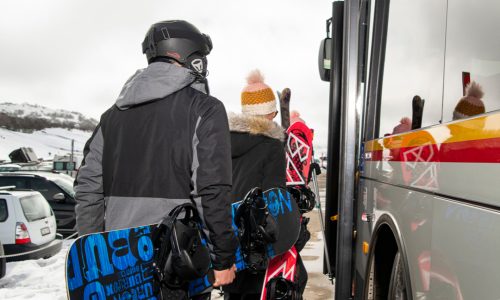
Snowy Mountains Resorts – Winter Bus Service
The Snowy Mountains Bus Service from Jindabyne to Perisher or Thredbo is the most affordable and s…
Visit Site
Snowy Mountains Helicopters
Helicopter Experiences From Winery Tours to Wilderness Picnics, Snowy Heli also offers a range of e…
Read More
Snowlink Shuttles
During the Winter Snowlink offers visitors to the Snowy Mountains a safe, reliable and cost-effectiv…
Visit Site
NSW Trainlink
Travel by train or coach to the Snowy Mountains with NSW TrainLink. The service runs from Sydney via…
Visit Site